
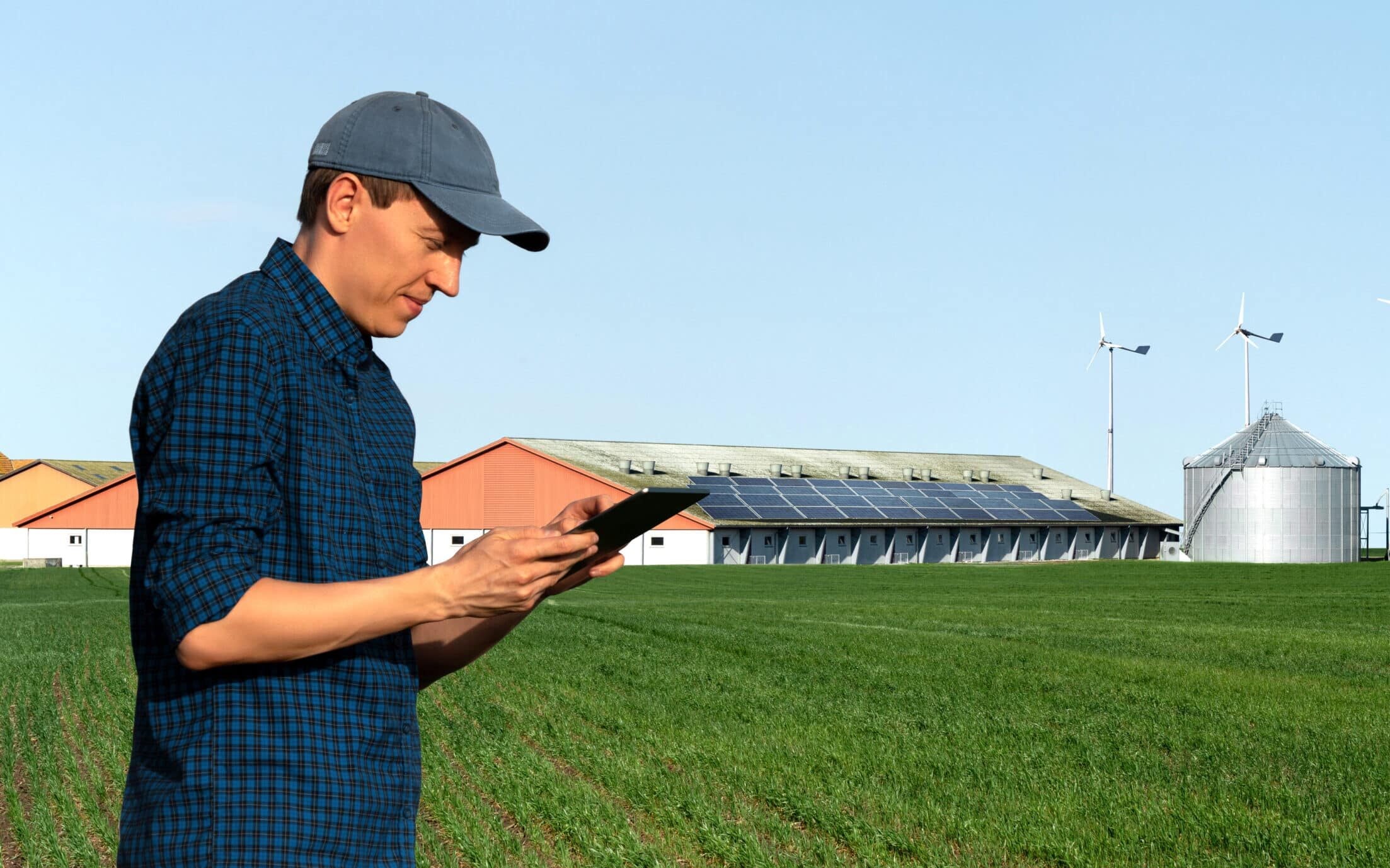
Prince Edward Island is aiming high. With a bold commitment to become Canada’s first net-zero province by 2040, the province is turning ambition into action, particularly in one of Canada’s most vital sectors: agriculture.
Across PEI, farms are at the frontline of this transition. Energy use, from heating barns to powering equipment, represents both a major cost and a major opportunity. To help producers adopt cleaner, more efficient technologies, the province launched the Agriculture Energy Systems Pilot Program in 2024.
“Agriculture is central to Prince Edward Island’s economy, and supporting producers in reducing energy use and emissions is a key part of our net-zero pathway,” says PEI Agriculture Minister Bloyce Thompson. “Governments are looking to educational institutions and industry not only to help farms become more efficient, but also to prepare the skilled workforce needed for this transition.”
As the pilot program rolled out, another challenge quickly became clear: there weren’t enough professionals with agriculture-specific energy expertise to support producers.
In response, Holland College—working with industry partners and supported by the Canadian Colleges for a Resilient Recovery (C2R2), a coalition of colleges, cégeps, and polytechnics across Canada—developed the Agriculture Energy Assessment (AEA) microcredential.
The AEA training demonstrates the strength of colleges rooted in their communities and working directly with industry and government to create training that responds quickly to emerging workforce needs.
Designed and delivered by agriculture energy expert Kraig Porter, the AEA training equips learners with practical skills to:
“Farm energy systems are complex, and every operation is different,” says Kraig Porter, Lead Energy Manager for Agriculture at Efficiency Nova Scotia and instructor for the training. “With curriculum shaped by industry input, this course gives people the tools to identify practical, cost-effective ways to improve efficiency on farms.”
The first AEA cohort launched in June 2024, bringing together 22 participants from backgrounds ranging from energy professionals to recent graduates.
Blending online learning with hands-on farm visits, participants conducted real-world energy assessments that delivered immediate value to producers.
The results were significant:
“Courses built beyond the classroom ensure our workforce has the in-demand skills to meet the challenges of a changing economy in weeks,” adds Minister Thompson.
Following the success of the pilot, Holland College expanded AEA into a fully online, instructor-supported microcredential, increasing access to learners across Canada.
The expansion highlights how C2R2 partners are scaling local innovation nationally by taking proven community-driven training models and adapting them to support Canada’s transition to a low-carbon economy.
“The C2R2 network takes proven local solutions and expands them with a national lens,” says Natalie Mitton, President & CEO at Holland College. “When colleges are working together, regional expertise can be repackaged to meet national needs.”
As the training progressed, another need emerged: helping professionals move beyond assessments to long-term energy planning.
To address this gap, Holland College developed the Agriculture Energy Management Planning (AEMP) microcredential in 2026. The advanced training focuses on building comprehensive, data-driven energy plans that align sustainability with farm profitability.
Together, AEA and AEMP create a practical pathway for supporting the future of sustainable agriculture, with AEA identifying opportunities and AEMP building long-term implementation plans.
“Colleges are agile and able to respond quickly to emerging provincial and national needs,” says Minister Thompson. “Industry identified a gap in energy planning, and Holland College responded. As new challenges emerge, colleges continue adapting training to meet sector needs.”
The transition to net-zero agriculture is not just about technology, it is about people. Through partnerships between colleges, industry, government, and the broader C2R2 network, Canada is building the workforce needed to support farmers through a rapidly changing energy landscape.